
Managing fragmented vendors for digital transformation creates delays and accountability gaps for organisations with regulated, complex systems. Several agencies offer piecemeal services, limit project transparency, or require long alignment calls before confirming pricing or ongoing scope. This overview shows which agency fits your size, sector, and compliance needs without waiting for a sales pitch or committing to discovery workshops.
Table of Contents
Cloud 9
At a Glance
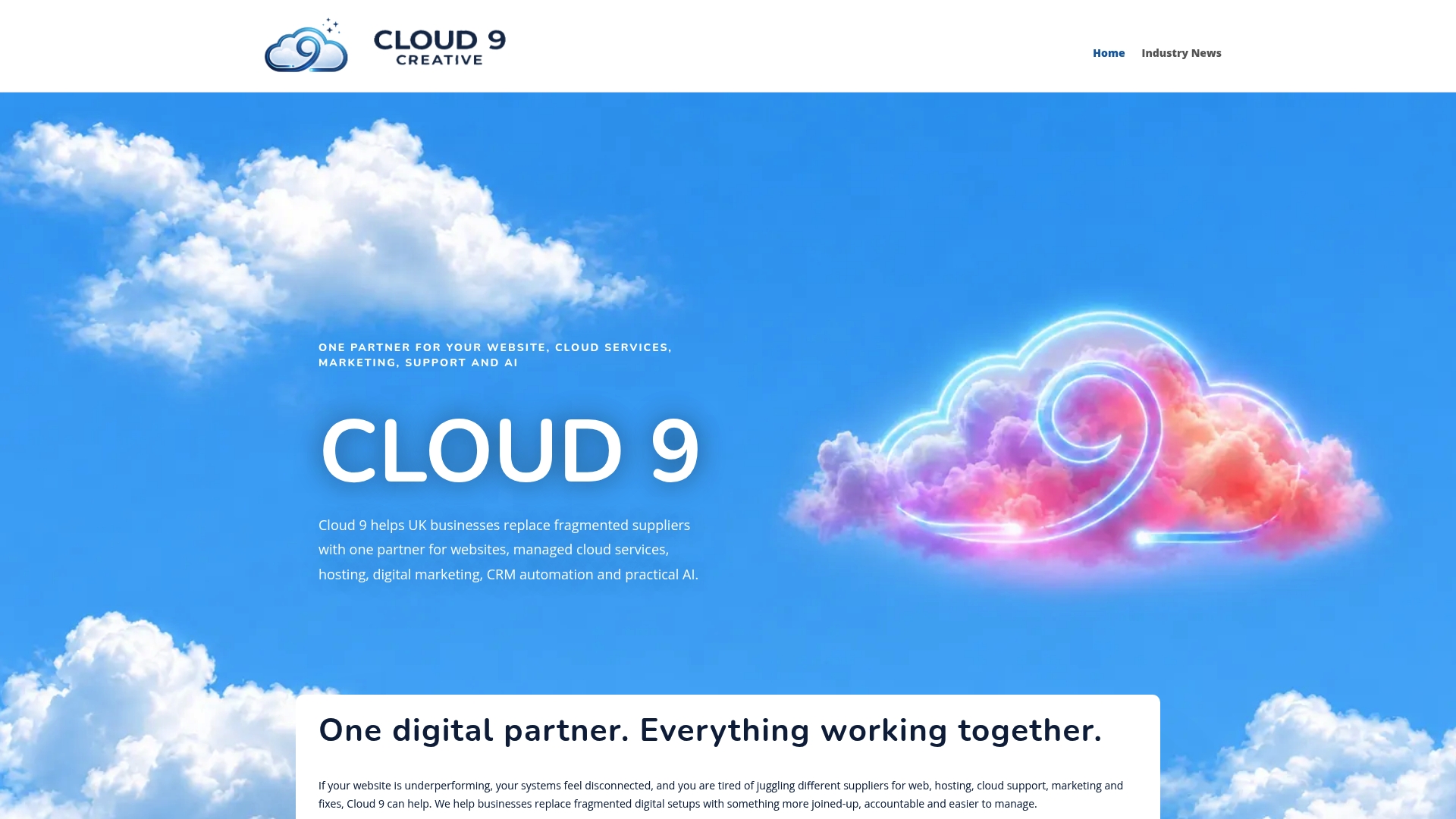
Replaces multiple fragmented suppliers with one managed partner for websites, cloud, marketing, CRM, AI, and ongoing support. That single‑partner model is aimed at established organisations that have outgrown piecemeal vendors. Cloud 9 focuses on reducing vendor handoffs and keeping ownership of integrations and support with one delivery team.
Core Features
The offering covers website management and a Website as a Service model that includes ongoing updates, maintenance, and backups. It delivers managed cloud support for Microsoft 365 and Google Workspace, plus domain and DNS administration, hosting services, and security hardening. Digital marketing, CRM automation and AI tools such as chatbots and internal assistants tie into finance and payment integrations including Xero, while cloud migration and retainer support handle continuity.
Key Differentiator
The single most distinguishing feature is the managed, joined‑up service that keeps website, cloud, marketing, CRM and automation under one accountable partner. That architecture reduces the number of handoffs between suppliers and gives a single technical owner for integrations. For organisations with complex systems this lowers time spent on vendor coordination and troubleshooting.
Pros
Cloud 9 removes the need to manage multiple vendors by combining hosting, cloud support, marketing and CRM under one management arrangement. Ongoing retainer packages provide continuous care for backups, security and updates so systems remain current and less prone to interruption. The team has expertise in wiring together finance, payment and marketing platforms, which helps when automating lead handling and repeatable tasks. Practical AI applications, like chatbots and workflow assistants, target administrative load rather than experimental projects.
Cons
- Public pricing and package customisation details are limited, so you will likely need a direct consultation to confirm costs and scope.
Who It’s For
Established SMEs, membership organisations, trade bodies, and B2B companies with complex digital estates will find this model useful. It suits professional services and operations‑heavy firms that want vendor accountability handed to a single partner. Ecommerce businesses needing managed hosting plus CRM and payment integrations will also benefit.
Unique Value Proposition
A retained partner that owns integrations and ongoing management keeps supplier coordination off your plate. That arrangement means your internal team spends fewer hours chasing fixes and more time on business tasks. For organisations that already have multiple suppliers, this model converts fragmented contracts into a single operational relationship.
Real World Use Case
A medium‑sized B2B firm consolidated website, CRM, email and cloud under Cloud 9 to reduce vendor management overhead. The move combined migration, hosting hardening and CRM automation so lead follow up became automated. Ongoing retainer support handled backups and security updates without internal firefighting.
Pricing
Cloud 9 does not publish fixed prices publicly. Pricing appears to be consultative and based on scope, with retainer options for ongoing support and managed services. Request a proposal to get a tailored package and clearer cost structure.
Website: https://cloud9.agency
Cyber-Duck
At a Glance
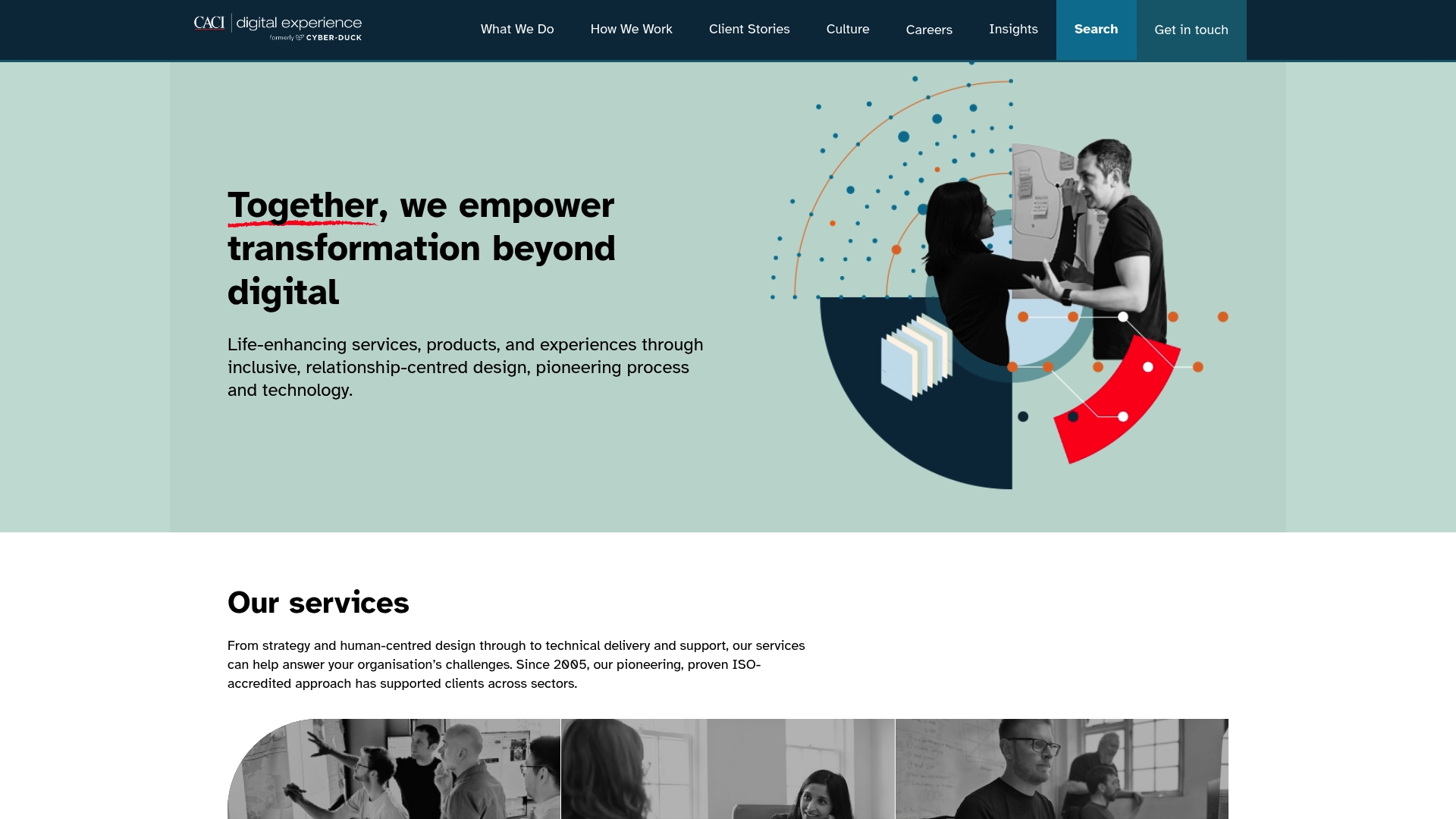
Founded in 2005, Cyber-Duck holds ISO accredited status and maintains long term partnerships with public and private organisations. The agency pairs human centred design with technical delivery for clients in government, finance, and healthcare. Their work often focuses on accessibility, security, and measurable service improvements.
Core Features
Cyber-Duck combines digital strategy and service design with inclusive user research to shape service blueprints and business cases. Their user experience and product design work targets practical accessibility improvements and clearer user journeys. They deliver web application development, content management and platform engineering that emphasise performance, security, and operational resilience.
Key Differentiator
The agency’s defining attribute is an ISO accredited methodology that links human centred design to technical change. That approach supports sustained organisational change rather than short term fixes. For mid and large clients this creates a single delivery model from research through to platform engineering.
Pros
Cyber-Duck has a track record of long term client relationships and sector experience across government, finance and healthcare. Their ISO accredited status and industry awards signal formal quality controls and governance. The team has a strong reputation for accessibility and security standards, and they pair research with engineering to reduce risk during delivery.
Cons
-
Scope and complexity can feel heavy for smaller projects. Some third party reviews highlight this as a friction point for small teams.
-
The agency does not publish standard packages. Public pricing information is limited, which makes early budget comparison difficult.
-
The primary focus on larger organisations means mid size firms may find engagement minimums implicit rather than stated.
Who It’s For
Organisations seeking full scale digital and experience design work will find Cyber-Duck a good match. The agency suits government departments, regulated financial services, large healthcare providers, and comparable enterprises. Small teams looking for a low cost, rapid website refresh are not the ideal fit.
Real World Use Case
A government agency engaged Cyber-Duck to redesign public facing services and improve accessibility. The project combined research, service design and platform delivery to raise satisfaction and cut service handling times. The example demonstrates how the agency links policy level goals to technical implementation.
Pricing
Cyber-Duck lists its pricing as “Not applicable — informational only” and does not publish fixed tiers. Projects are scoped and quoted individually, so expect bespoke proposals rather than off the shelf fees. Prospective clients should request an engagement outline and a detailed estimate during the discovery phase.
Website: https://cyber-duck.co.uk
FatFish Digital
At a Glance
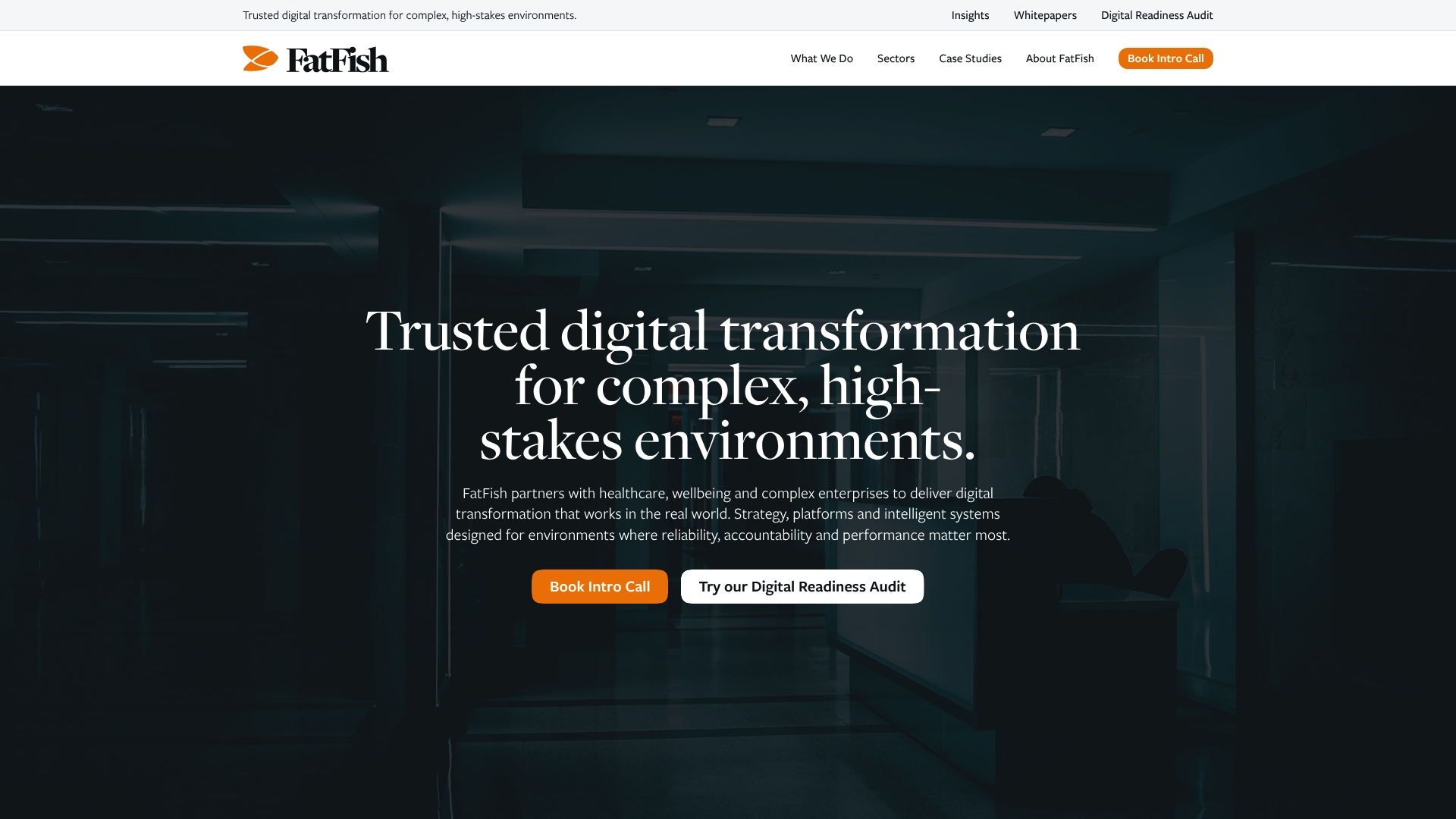
FatFish builds systems aligned with NHS DSPT, GDPR, and ISO 27001, plus Cyber Essentials Plus. They focus on regulated healthcare, wellbeing, and large enterprise environments where data sensitivity and auditability matter. Projects combine strategy, platform delivery, and governance so compliance is not an afterthought.
Core Features
Their work combines strategic consulting with platform delivery and governance, so security is designed into every phase. They integrate AI and automation while keeping oversight controls and risk management within workflows. Security, privacy, and regulatory practices are explicitly mapped to relevant standards during design and delivery.
Key Differentiator
FatFish embeds governance and compliance from project inception rather than adding them after delivery. That approach suits organisations that must demonstrate audit trails, role based controls, and traceable decision points. That method reduces the need for separate governance audits later in the programme.
Pros
They bring sector experience in healthcare and wellbeing, which shortens learning curves when clinical safety and data protection matter. Their combined strategy and delivery model reduces handover losses because the same team sets governance and builds the platform. Security focus, including alignment with recognised standards, lowers risk for organisations that must pass external audits and procurement checks. They can manage large, interconnected systems that demand traceable decision logs.
Cons
- Narrow focus on regulated sectors limits suitability for startups or simple projects.
- Engagements often run longer because compliance, governance, and stakeholder work add phases.
- Pricing is customised to scope and regulation, so smaller budgets may not be a good fit.
When It May Not Fit
Not suitable for startups or unregulated organisations that need fast, low cost delivery. Projects with tight timelines and limited stakeholder capacity will struggle with the planning and governance phases. If you only need a basic brochure site, FatFish’s compliance driven process will add unnecessary complexity.
Who It’s For
Large healthcare providers, healthtech vendors, wellbeing charities, and regulated enterprises seeking accountable digital transformation. Teams that must evidence patient safety, data governance, and security controls during procurement will get the most value. Buyers expecting bespoke compliance and long term operational oversight should shortlist FatFish.
Real World Use Case
A hospital needing an interoperable patient data platform engaged FatFish to meet NHS DSPT and GDPR requirements. The project combined API design, security architecture, and governance to reduce operational friction for clinicians. The result was a deployable platform with audit trails and defined oversight for clinical decision support.
Pricing
FatFish does not publish standard tiers. Pricing appears to be customised to scope, risk profile, and regulatory needs. Expect charges for extended planning, governance workshops, and security assurance activities. Costs are likely to reflect regulatory testing and external assurance activities, so early scoping is necessary for realistic budgeting.
Website: https://fatfishdigital.co.uk
Comparison of alternatives
Cloud9.agency, Cyber-Duck, and FatFish Digital each present distinct strengths for specific organisational requirements. By analysing their core offerings, operational focus, and specialisations, organisations can choose the partner for their digital transformation projects.
Integration and operational efficiency
Cloud9.agency stands out for its unified service model. Organisations can consolidate their marketing, cloud, hosting, and automation workflows under a single integration-owning vendor. This structure eliminates the need for managing multiple suppliers, an advantage over Cyber-Duck’s more segmented service catalogue. However, for small-scale projects requiring rapid results, Cyber-Duck’s efficiency focus may outweigh the benefits of Cloud9’s approach.
Compliance and governance implementation
FatFish Digital distinguishes itself with its deep expertise in mandated compliance, explicitly embedding governance and audit requirements during project planning and execution. For healthcare providers and regulated industries requiring rigorous adherence to standards like GDPR or NHS DSPT, this capability is critical. Cloud9.agency offers integrations with payment and automation tools but does not have the same sector-specific rigour as FatFish Digital.
Best fit
- Medium-sized businesses aiming for streamlined operations, integrating CRM, cloud, and continuous website maintenance, and favouring vendor accountability to reduce their internal workload.
- Government and public sector organisations seeking to improve accessibility compliance within a clear digital transformation framework through research and ISO-accredited strategies, such as those offered by Cyber-Duck.
- Healthcare or other regulated entities that must provide audit trails, align with pertinent standards, and implement governance from inception as ensured by FatFish Digital’s expertise.
Our pick
For established SMEs with multifaceted digital needs, Cloud9.agency’s cohesive model simplifies vendor management and integration processes. Their approach, combining marketing, hosting, CRM and automation under one purview, delivers unique value. However, regulated industries may find FatFish Digital’s compliance-focused processes more aligned with their operational needs, and organisations looking for governance assurance should consider Cyber-Duck.
Choosing the right digital transformation partner can streamline operations by consolidating services into one comprehensive and managed solution.
| Product | Key Use Case | Notable Advantage | Limitations | Pricing |
|---|---|---|---|---|
| Cloud9 | Consolidated services under one managed partner | Reduces vendor management with a single point of contact | Requires consultation for specific pricing and scope details | Price not published |
| Cyber-Duck | End-to-end service design for public and private organisations | ISO-accredited methodology ensuring quality control | May be less suited for small-scale or rapid projects | Price not published |
| FatFish Digital | Compliance-focused digital transformation for regulated sectors | Built-in governance and security standards | Less suitable for non-regulated or expedited projects | Price not published |
Choosing a Single Partner for Your Complex Digital Needs
Companies seeking fullwerks.co.uk alternatives often face challenges managing multiple vendors across website, cloud, marketing, CRM, and AI. Cloud9 offers a clear solution by combining these services into one managed partner. This approach reduces the time spent on coordination and troubleshooting, letting SMEs, membership organisations, and professional firms focus on growth.
Cloud9’s expertise in practical AI, CRM automation, and integrated cloud support meets the needs of organisations with complex digital estates. Learn more about how their AI tools can assist you in the AI archives at Cloud 9.
See how Cloud9 can simplify your digital operations with single-partner accountability. Visit Cloud9’s website to book a consultation and get support tailored for your needs.
FAQ
How does Cloud9 manage digital transformation services?
Cloud9 provides a managed service that combines website management, cloud support, and marketing services. This includes ongoing maintenance, backups, and security hardening under one accountable partner. Businesses looking for simplicity and reduced vendor coordination will find Cloud9’s approach beneficial.
What is the difference between Cyber-Duck and Cloud9?
Cyber-Duck excels in long-term client relationships and has a strong focus on accessibility and security standards. Cloud9, on the other hand, is designed for established SMEs seeking to consolidate multiple service areas into one seamless account management solution. For organisations needing a broader scope, Cyber-Duck’s strengths in regulatory compliance may be more relevant.
Which platforms does Cloud9 integrate with for CRM and finance?
Cloud9 integrates with tools such as Xero for finance and various CRM systems. This capability helps businesses automate lead handling and streamline their operations, making it an excellent choice for those looking to improve efficiency in their digital workflows.
Can I use Cloud9 if my business only requires managed hosting?
Cloud9 caters to organisations needing comprehensive digital transformation rather than just managed hosting. While it excels in integrating various services, businesses seeking only hosting solutions may find more suitable alternatives elsewhere.
What features contribute to Cloud9’s effectiveness in digital transformation?
Cloud9’s Website as a Service model includes ongoing updates, maintenance, and security hardening, allowing businesses to stay current and minimise interruptions. This is ideal for organisations that require constant support and management of their digital assets.