

Most UK website redesigns cost between £1,500 and £80,000, with a typical small business landing somewhere between £3,000 and £8,000. The right figure for you depends on page count, integrations and who does the work. Visual refreshes sit at the low end, eCommerce and enterprise rebuilds at the top. Get an itemised quote before committing, since scope, not headline price, is what actually moves the final invoice.
TL;DR:
- Visual refreshes cost £1,500 to £5,000 and take two to four weeks, suitable for businesses needing a quick, simple update.
- Small business redesigns for five to fifteen pages typically range from £3,000 to £8,000, with a completion time of four to eight weeks.
- Complex projects like B2B or eCommerce sites can reach £15,000 to £60,000 or more, with timelines spanning three to six months depending on integrations.
- Platform choice, page count, integration complexity, and agency location significantly influence the final cost and delivery time.
- Extra costs such as copywriting, photography, SEO migration, hosting, and ongoing support often add 20 to 50 percent to the headline price.
Table of Contents
- How much does a website redesign cost in the UK?
- What actually drives your redesign price up or down
- Who does the work, and what that means for price and timeline
- The hidden costs that catch UK businesses out
- How to budget properly and get quotes you can actually compare
- Why fragmented suppliers usually cost more than they look like they save
- What the market rates actually tell you
- Get a straight answer on what your redesign will actually cost
- Sources
- FAQ
How much does a website redesign cost in the UK?
Pricing splits into clear bands once you know what each buys. A visual refresh (new templates, updated branding, no structural rebuild) typically runs £1,500 to £5,000, delivered in two to four weeks. It suits a business that just needs to stop looking dated.
A small business redesign, covering five to fifteen pages, a CMS rebuild and basic SEO groundwork, commonly costs £3,000 to £8,000 and takes four to eight weeks. This is the band most independent shops, trades businesses and small professional firms fall into.
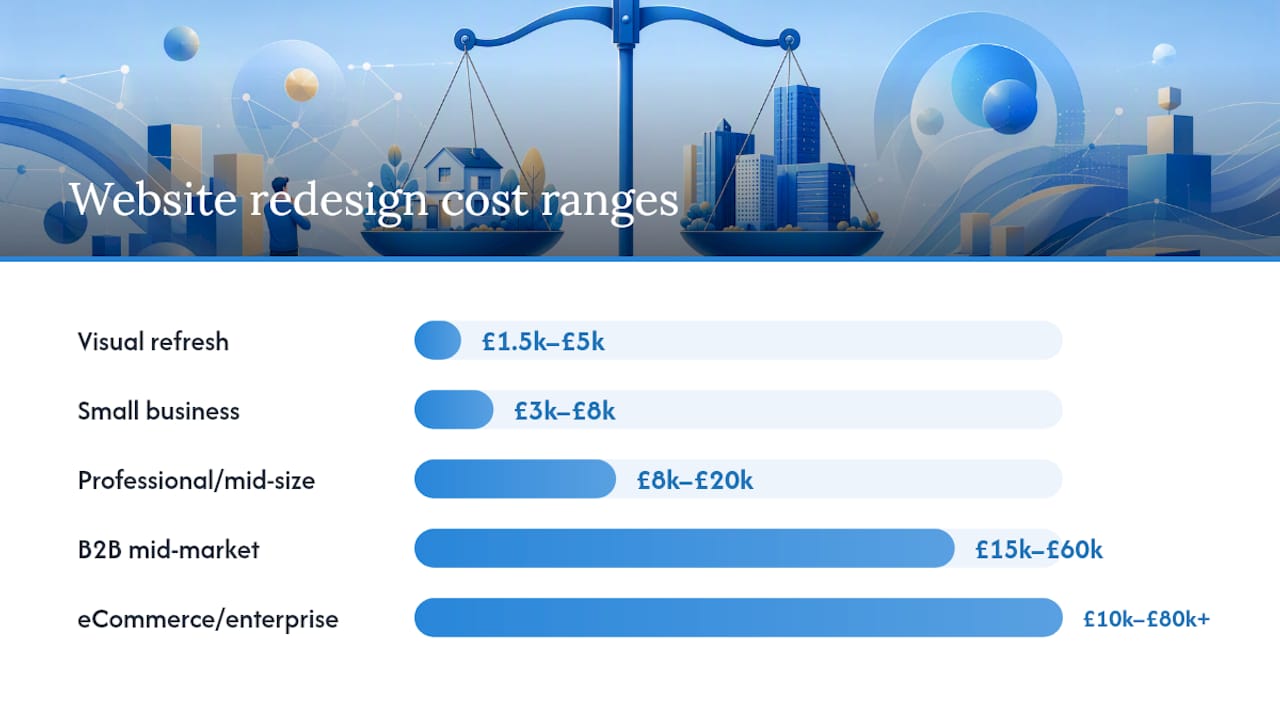
Professional or mid-size projects, which usually mean bespoke design work, custom functionality, and integration with a CRM or booking system, land at £8,000 to £20,000, often stretching to eight or twelve weeks. Many B2B redesigns with more complex sales processes push past this, with most B2B rebuilds falling between £15,000 and £60,000.
eCommerce and enterprise projects range from £10,000 up to £80,000 or more, depending on catalogue size, payment integrations and custom checkout logic. Timelines here run three to six months.
| Project type | Typical UK cost | Typical timeline | What’s usually included |
|---|---|---|---|
| Visual refresh | £1,500–£5,000 | 2–4 weeks | New templates, branding update, no rebuild |
| Small business redesign | £3,000–£8,000 | 4–8 weeks | 5–15 pages, CMS setup, basic SEO |
| Professional/mid-size | £8,000–£20,000 | 8 weeks | Bespoke design, CRM/booking integration |
| B2B mid-market | £15,000–£60,000 | 3–5 months | Complex sales funnels, portal integration |
| eCommerce/enterprise | £10,000–£80,000+ | 3–6 months | Catalogue migration, payment gateways, custom checkout |
Bear in mind that platform migrations, moving from one CMS or eCommerce system to another, are often quoted separately, with migration work alone typically costing £8,000 to £18,000 on top of the redesign itself.
What actually drives your redesign price up or down
The headline figure only tells you so much. Six factors do most of the work in pushing a quote higher or lower.
- Page count and template variety. Ten templated pages cost far less than ten bespoke layouts, even at identical page counts, because bespoke design means new decisions for every screen.
- Platform choice. WordPress is usually the lowest-cost entry point, while Shopify carries transaction and app fees, and headless setups using Next.js cost more upfront but tend to perform better and scale further. HubSpot CMS builds sit at the higher end once you factor in the platform’s own licensing.
- Integration complexity. Wiring a CRM, a payment gateway, or a membership portal into the new site adds development hours that a simple content site never needs.
- Content creation. Copywriting and photography are frequently quoted separately from the build fee, not bundled into it.
- Accessibility and performance targets. Meeting WCAG 2.2 standards or hitting strict Core Web Vitals scores means extra testing and development time.
- Agency location. London-based teams often charge 50 to 80% more per hour than offshore or regional teams, though fixed-price contracts can neutralise that risk regardless of where the team sits.
Pro Tip: Ask any supplier to break bespoke design hours out from templated build hours in the quote. If they can’t separate the two, they probably haven’t costed the project properly.
Who does the work, and what that means for price and timeline
Provider choice affects price more than almost anything else on this list. A DIY build on Squarespace or Wix costs little beyond a monthly subscription but demands significant hands-on time from you or your team, and rarely matches a professionally built site on speed or SEO structure.
- Freelancers and small studios typically charge from a few hundred pounds up to a few thousand for small redesigns, with some publishing fixed-price packages that avoid surprise add-ons.
- Small to mid-size agencies sit in the £3,000 to £20,000 range, generally offering a proper discovery phase and post-launch support.
- Large or London-based agencies command the highest rates, often justified by bigger teams and enterprise-grade project management, but not always by better output.
Typical timelines vary by project size, from a few weeks for visual refreshes to several months for larger enterprise rebuilds. Whichever provider you choose, insist on a fixed-price or milestone-based contract with a defined post-launch support retainer. It’s the single easiest way to stop a redesign quietly becoming a bigger job than you agreed to.
The hidden costs that catch UK businesses out
Build fees rarely cover everything. Budgeting for the extras below now saves an awkward conversation later.
- Copywriting: £50 to £200 per page, depending on complexity and research required.
- Photography: £500 to £2,000 for a professional shoot covering a typical small business site.
- SEO migration and redirects: rarely priced as a fixed line item, but essential. Getting it wrong risks losing existing search rankings during the switch.
- Hosting and platform subscriptions: ongoing, separate from the build fee.
- Maintenance retainers: £100 to £500 a month for updates, security patches and small content changes.
Third-party licences, payment processing fees and integration upkeep add further recurring cost. None of it shows up in a headline build price, which is exactly why total cost of ownership over three years often dwarfs the initial invoice.
How to budget properly and get quotes you can actually compare
Vague briefs produce vague quotes. Give every prospective supplier the same information and you’ll get numbers you can genuinely put side by side.
- State your objectives, current page count, and every integration you need (CRM, payment gateway, booking system).
- Set accessibility and performance targets upfront, not as an afterthought once development starts.
- Share two or three reference sites you like, and explain why.
- Ask how migration, redirects and SEO continuity will be handled, and what support SLA applies after launch.
A 30/40/30 milestone split, deposit, design approval, launch, ties payment to delivery and cuts down on disputes.
Pro Tip: Read every quote for what’s excluded, not just what’s included. Missing copywriting or a vague “hosting to be confirmed” line usually means an invoice you didn’t budget for.
Why fragmented suppliers usually cost more than they look like they save
Cloud9’s practical guide to website redesigns walks through discovery, information architecture, migration and launch in the order they actually happen, not the order a sales pitch prefers. That sequencing matters because most hidden costs appear precisely where handoffs between separate suppliers occur, hosting, SEO, content, development, each billed and managed by a different vendor.
- A single managed provider removes the gaps between design, hosting, SEO and ongoing support.
- Established businesses researching redesign ROI consistently find value in support that continues past launch day, not stops at it.
- Brief-prep resources help you walk into vendor conversations, with a scope tight enough to price accurately.
What the market rates actually tell you
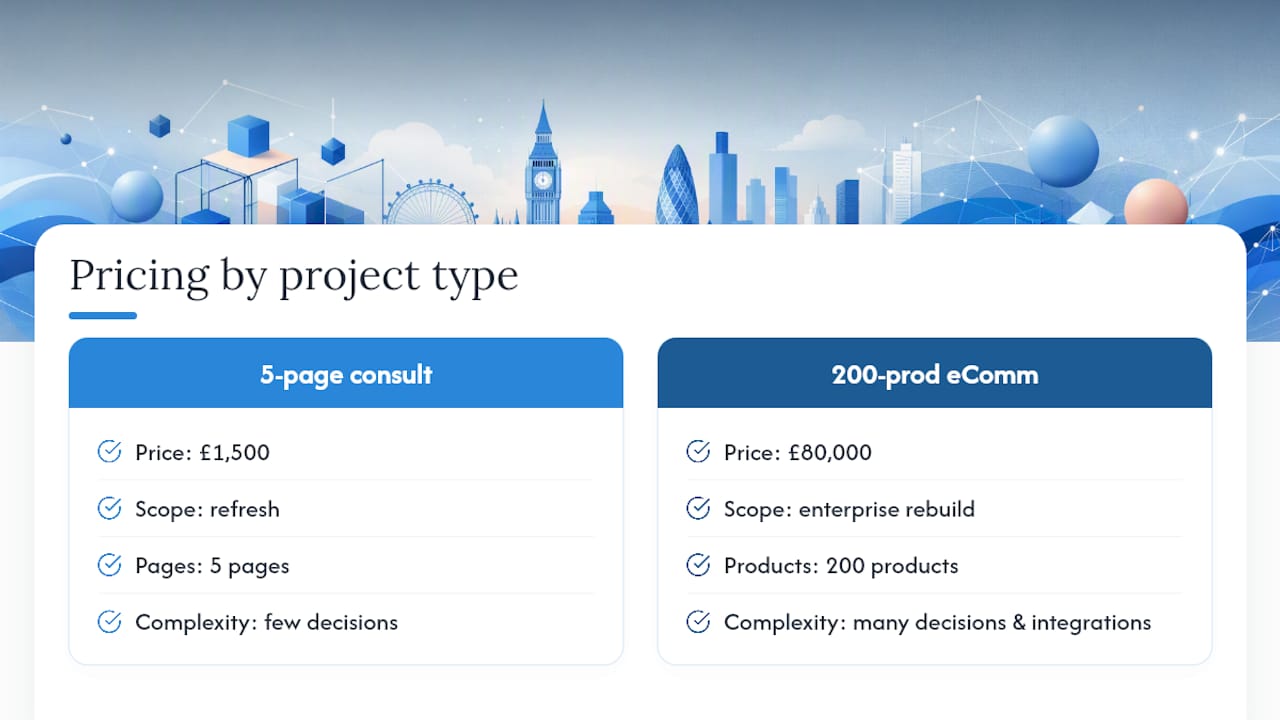
The spread in 2026 UK pricing, from £1,500 refreshes to £80,000 enterprise rebuilds, isn’t really about quality. It’s about how many separate decisions and integrations sit inside the project. Most guides quote a single average figure, which is close to useless: a redesign for a five-page consultancy site and a redesign for a 200-product eCommerce catalogue have nothing in common except the word “redesign”.
The advice to “get three quotes” is fine but incomplete. Three quotes built from three different briefs just give you three unrelated numbers. What actually helps is fixing the brief first, page count, integrations, performance targets, then quoting against that fixed scope. That’s where most of the wasted negotiation time in this market goes: not haggling over price, but discovering halfway through that everyone quoted a different job.
If there’s one thing worth prioritising above all else, it’s asking every supplier to itemise design, development, content and ongoing support separately. A single lump-sum number hides more risk than it removes.
— Rob
Get a straight answer on what your redesign will actually cost
Rather than juggling a design freelancer, a separate hosting provider and a third agency for SEO, a single managed project can run your redesign from discovery through to post-launch support, so nothing falls into the gap between suppliers.

A typical engagement starts with a discovery conversation to map your page count, integrations and goals, followed by an itemised quote broken into design, development, content and testing, then delivery against agreed milestones. Cloud9’s Web Design and Development service covers the build itself, while Website as a Service bundles the redesign with ongoing hosting, security and support so you’re not left managing three invoices from three different suppliers once the site goes live. If you want a scope-accurate quote instead of a rough guess, consider starting a discovery call and requesting an itemised breakdown.
Sources
- Website Redesign Cost in the UK 2026: Full Breakdown
- Website Redesign Cost UK 2026
- Website Redesign Cost UK 2026: Full Pricing Guide for SMBs
FAQ
How much should I charge to redesign a website?
Freelancers and small studios in the UK commonly charge from a few hundred pounds up to a few thousand for a small business redesign, while agencies typically price mid-size projects between £8,000 and £20,000. The right figure depends on page count, bespoke design work and whether integrations like a CRM or payment gateway are involved.
How much should a full website design cost?
A full redesign for a small UK business typically costs £3,000 to £8,000, covering five to fifteen pages, a CMS build and basic SEO setup. Larger B2B or eCommerce projects with custom functionality often run £15,000 to £60,000 or more.
How much should I pay someone to design my website?
Pay scales with scope and provider type: a visual refresh from a freelancer might cost under £2,000, while a bespoke mid-size rebuild from an agency typically costs £8,000 to £20,000. Always request an itemised quote separating design, development and content so you know exactly what each pound buys.
What’s usually missing from a redesign quote?
Copywriting, professional photography, SEO migration work and ongoing hosting or maintenance retainers are the extras most often left off a headline quote. Budget separately for £50 to £200 per page for copy and £100 to £500 a month for maintenance once the site launches.
Does Cloud9 offer fixed-price website redesign quotes?
Cloud9 doesn’t publish fixed public pricing, since project cost depends on page count, integrations and platform choice. You can request an itemised quote directly through Website as a Service or the Web Design and Development page after a discovery conversation.