

Most UK small businesses pay between £75 and £250 a month for proper website maintenance, though budget plans start around £25 and ecommerce or premium sites often run £250 to £750. The number that actually moves is labour, not infrastructure: a Nominet domain costs pennies a day and SSL via Let’s Encrypt is free, so what you’re really paying for is a person’s time. Firms like Cloud9 exist because that time needs managing properly.
TL;DR:
- Most UK small businesses pay between £75 and £250 monthly for standard website maintenance, with ecommerce sites often costing £250 to £750.
- The main driver of costs is human labor, not infrastructure, with support hours and testing significantly affecting the price.
- Budget plans typically include automated updates and basic monitoring, while higher tiers offer staging, testing, quicker response times, and dedicated support.
- Proper maintenance should itemize costs for hosting, security, backups, monitoring, and development hours; lack of transparency may hide unaccounted expenses.
- Companies often underestimate the importance of backups and security, risking large expenses from malware removal or site failures if these areas are neglected.
Table of Contents
- What does website maintenance cost in the UK?
- What does a maintenance fee actually pay for?
- How much should I budget by site type?
- Is DIY website maintenance actually cheaper?
- How do I choose the right maintenance plan?
- What we see when UK clients choose a maintenance band
- Get a clear price for your website’s upkeep
- Sources
- FAQ
What does website maintenance cost in the UK?
A price check of 12 live UK maintenance plans in July 2026 found monthly fees ranging from £29 to £379, with most small-business plans clustering between £40 and £99. That spread tells you something useful: the gap between a £40 plan and a £300 plan isn’t hosting quality, it’s how many human hours are baked into the fee.
A widely used UK market heuristic breaks costs into four rough bands:
- Budget or DIY-assisted (£25–£75/month): automated backups, basic uptime monitoring, unattended plugin or core updates, and little to no human review.
- Standard SME care (£75–£250/month): a staging environment, tested (not just automatic) updates, monthly reporting, and typically 1 to 3 hours of support or content edits.
- Ecommerce or premium (£250–£750/month): everything above plus checkout and payment testing, extension licence management, and faster response commitments.
- Agency retainer or enterprise (£750+/month): named response times, a service level agreement, dedicated development hours, and often an account manager who knows your setup.
Annualised, a standard SME plan at a moderate monthly fee works out to a reasonable yearly planning figure if you’re budgeting from scratch. One thing trips up almost every business comparing quotes: many published prices exclude VAT, so a “£99/month” plan can land at £118.80 once VAT is added. Always ask whether the quoted figure is net or gross before comparing two providers side by side.
What does a maintenance fee actually pay for?
Break the fee into its parts and it stops feeling abstract. Here’s roughly what sits inside a typical plan:
- Security and updates: there’s a real difference between a plugin auto-updating unattended overnight and an engineer staging that same update, testing it, then pushing it live. The second option costs more because it prevents the update from breaking your checkout page.
- Backups and restore testing: offsite backup storage itself is cheap. What costs money is someone actually testing a restore works, rather than discovering the backup was corrupt the day you need it.
- Monitoring and performance: uptime pings, load-time checks, and Core Web Vitals monitoring feed into how a site ranks and converts. Google’s own benchmarking work shows mobile speed has a measurable effect on user behaviour, which is why performance checks sit inside most professional plans rather than as an add-on.
- Content updates and development hours: hourly rates for ad hoc dev work in the UK typically sit well above what’s bundled into a monthly retainer, which is often the strongest argument for buying a block of hours upfront.
Pro Tip: Ask any provider to itemise their monthly fee into hosting, security, backups, monitoring and dev hours. If they can’t break it down, you’re likely paying for a bundle they haven’t costed properly either.
Security deserves particular weight here. Industry website threat reporting consistently shows how common exploitable vulnerabilities are on unpatched sites, which is precisely why active patching earns its place in a maintenance budget rather than being treated as optional.
How much should I budget by site type?
Your site type changes the maths more than any other factor.
- Brochure or small WordPress site (5–15 pages): budget or DIY-assisted coverage is usually enough, meaning £25 to £75 a month with automated backups and basic monitoring as the non-negotiable minimum.
- Standard business site (20–60 pages): this is where standard SME care earns its keep, at £75 to £250 a month, covering staging, monthly content edits, and proper monitoring.
- Ecommerce or booking sites: expect £250 to £750 a month once you factor in extension licence renewals, payment gateway testing after every update, and faster response times when checkout breaks at 2am on a Saturday.
- Custom applications or high-traffic sites: these sit above £750 a month routinely, because they need structured release management, an on-call rota, and support staff who understand bespoke code rather than a stock WordPress theme.
A rough planning rule worth keeping in your back pocket: annual maintenance often works out to roughly 15% to 20% of what the site cost to build. If you spent £6,000 on a new business site, budgeting £900 to £1,200 a year for its upkeep is a sensible starting point, not a guess.
Is DIY website maintenance actually cheaper?
DIY covers infrastructure costs fine. You’ll spend perhaps £10 to £30 a month on hosting and a backup plugin, plus roughly 2 to 5 hours of your own time monthly if you’re comfortable with WordPress updates and basic troubleshooting.
What DIY typically misses:
- No staging environment, so updates get tested live on your actual site.
- No restore testing, meaning your backups might not actually work when you need them.
- Limited monitoring, so a site outage at midnight goes unnoticed until a customer complains.
The financial risk shows up when something goes wrong. Malware cleanup in the UK typically costs £600 to £2,500, plus the lost trading time while it’s sorted. Compare that against a £100 monthly managed plan, which is £1,200 a year, and one bad infection year alone can wipe out any DIY saving. The arithmetic tends to favour professional care once your site earns real revenue.
How do I choose the right maintenance plan?
Before signing anything, run through a short checklist and don’t skip it because a quote looks reasonable on price alone.
- Does a named person (not just software) review updates before they go live?
- Is there a staging environment separate from your live site?
- Are backups restore tested, not just stored?
- What’s included in monitoring: uptime only, or performance and security too?
- How many development hours are bundled, and what’s the hourly rate beyond that?
- Is the published price inclusive of VAT?
- What’s the response time for a broken site, and is that in writing?
Ask providers directly: “What’s excluded from this price?”, “Do you test restores, and how often?”, and “Who owns the hosting account and domain if we leave?” That last question matters more than most business owners realise, since some smaller agencies register domains in their own name rather than the client’s.
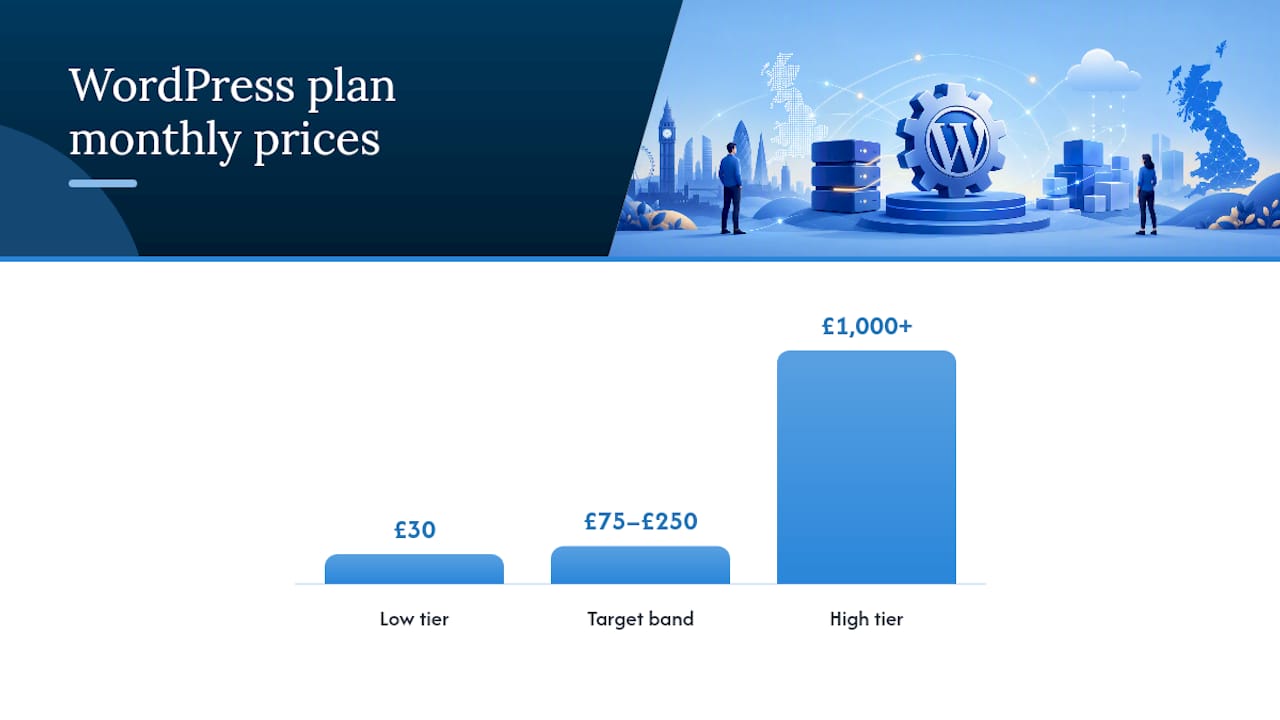
Pro Tip: A WordPress-specific maintenance plan can range from £30 to over £1,000 a month depending on tier. Match the tier to your actual traffic and revenue, not to what sounds impressively thorough.
Watch for vague scope language like “unlimited support” with no definition of what that covers, and providers who won’t put response times in writing. Clearer scope usually means fewer surprise invoices later, and it’s worth pushing back until a supplier gives you specifics rather than reassurance.
What we see when UK clients choose a maintenance band
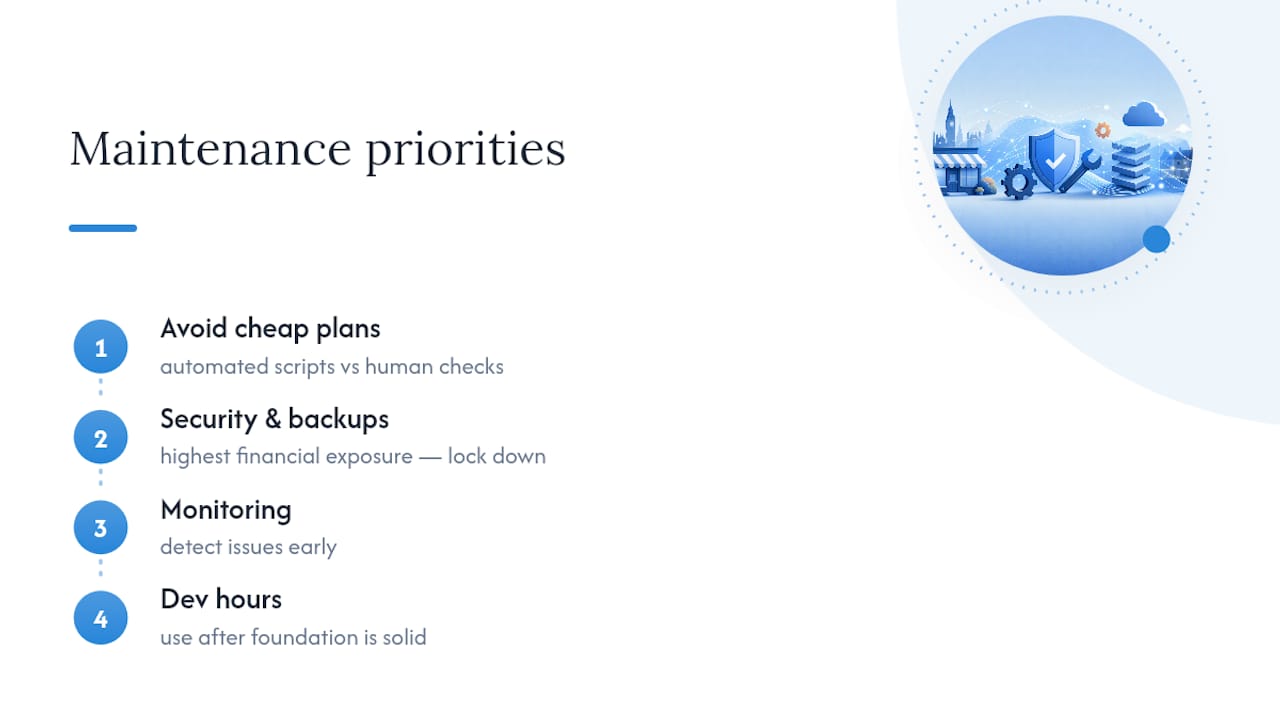
The most common mistake is confusing a cheap platform fee with adequate cover. A £30 plan and a £150 plan can look similar on a sales page, but one buys automated scripts and the other buys a person checking the work.
Our advice to SMEs is to prioritise in order: security and backups first, because that’s where the real financial exposure sits, then monitoring, then dev hours once the foundation is solid. Businesses that skip straight to “we need someone to update our homepage monthly” without sorting backups first are usually the ones facing an unplanned £1,000 remediation bill within a year or two. Get the boring stuff locked down before you spend on anything else.
— Rob
Get a clear price for your website’s upkeep
One managed service can replace the patchwork of a cheap hosting plan, a freelancer for updates, and a separate security tool with a unified solution that coordinates these functions. Instead of stitching together three suppliers and hoping they agree on whose job it is when something breaks, you get one point of contact who already knows your setup.

Our Managed Hosting and Website Care covers the components this article has walked through: tested updates, monitored uptime, restore-tested backups, and dev hours that don’t disappear if you don’t use them that month. It suits established SMEs who’ve outgrown a DIY setup but don’t want the overhead of managing multiple vendors separately. If you’re weighing this against a broader rebuild, our Website as a Service model bundles design, hosting and ongoing care into a single subscription.
The sensible next step is to request a quote against your actual site: its page count, traffic, and whether it runs ecommerce. Check our pricing and plan structures and ask us the same checklist questions this article gave you. We’d expect nothing less.
Sources
FAQ
How much does it cost to maintain a website in the UK?
Most UK small businesses pay between £75 and £250 a month for standard maintenance, though a live price check of 12 UK plans found fees ranging from £29 to £379. Ecommerce and premium sites typically sit higher, from £250 to £750 a month.
How much should website maintenance cost?
It depends entirely on what’s included: a plan with tested backups, monitoring, and a few dev hours justifiably costs more than one offering automated updates alone. As a planning rule, annual maintenance often runs at roughly 15% to 20% of the original build cost.
How much should I charge for a website in the UK?
This depends on scope, complexity and ongoing support included, and rates vary widely across freelancers and agencies. Cloud9’s Web Design and Development pricing is available on request based on your specific project.
How much should I pay someone to host my website?
Basic shared hosting starts from around £7 a month, but managed hosting that includes monitoring, security and support typically costs more because it bundles in human oversight, not just server space. Cloud9’s Managed Hosting and Website Care pricing is available on request depending on your site’s needs.