Clients leave professional firms because the relationship becomes unsustainable, not because a competitor undercuts the fee. A qualitative interview study of financial managers found relationship issues, especially poor availability, were the leading reason clients switched audit firms, and Morningstar’s advisor research shows service quality explains far more departures than performance does. Do this today: pull your last five client exits and check whether responsiveness dropped before the invoice ever became an issue.
- Relationship breakdown, not price, drives most departures
- Availability is the specific factor most firms underrate
Pro Tip: Before you touch pricing or delivery processes, audit your last 90 days of client emails for response-time drift. That single check often exposes the real problem faster than a client survey.
Key Takeaways
Client exits from professional firms stem primarily from relationship breakdown, especially poor availability and communication, with price acting as an accelerant rather than a root cause.
| Point | Details |
|---|---|
| Relationship, not price, drives exits | Availability and communication failures outrank fees as the leading cause of client departures. |
| Delivery gap is real | 48% of clients cite delivery dissatisfaction as their top reason for leaving, far above what firms themselves assume. |
| Watch behaviour, not billing | Slower replies, missed reviews, and junior handovers are earlier warning signs than a formal complaint. |
| Systems beat single relationships | Two-person account coverage protects the firm when a trusted individual leaves or is unavailable. |
| Cloud 9 supports the operational fix | CRM automation and managed cloud services from Cloud 9 help firms keep onboarding, reporting, and platform reliability consistent. |
Table of Contents
- Common reasons clients leave professional firms
- How to prevent clients leaving your firm
- Why acquisition doesn’t guarantee retention
- Early warning signs and metrics that predict churn
- How to handle a client who says they’re leaving
- A 30-day playbook to pilot retention fixes
- Role of firm culture and trust in client retention
- How competitors and market alternatives influence client exits
- Real-world patterns behind client churn
- Segmenting clients for a sharper retention approach
- Systems beat heroics in client retention
- How Cloud 9 helps you fix the retention gaps that matter
- Sources
- FAQ
Common reasons clients leave professional firms
Most exits trace back to a handful of repeatable failures, and they rarely happen in isolation. Poor communication tops the list: clients stop hearing from you between milestones, and silence gets read as neglect. Perceived indifference follows close behind, often triggered by slow replies or a sense that the account has been handed down the seniority ladder.
Delivery failures and unmet expectations compound the damage. Swydo’s client-side survey found that A substantial portion of clients cited dissatisfaction with delivery as their top reason for ending an agency relationship, yet agencies themselves ranked delivery far lower on their own list of suspected causes. That gap matters. Firms keep solving for price when clients are actually leaving over execution.
Other recurring causes:
- Billing friction — surprise extra charges land worse than the amount itself, especially when no one flagged them in advance
- Single-person dependence — the relationship lives with one account handler, and any wobble in that relationship threatens the whole contract
- Poor business knowledge — the firm never learned enough about the client’s actual commercial pressures to advise well
- Service commoditisation — the client can no longer tell what they’re paying extra for
Price becomes the stated reason almost every time, but it’s usually the last domino. When the relationship is healthy, clients tolerate fee increases and billing surprises far more readily.
How to prevent clients leaving your firm
Fix the cheap, fast problems first, then build the structural ones around them.
- Put two people on every important account. HBR’s research found clients are often loyal to individuals rather than firms, which means a single departure or a bad week can put the whole relationship at risk. Shared coverage removes that fragility.
- Formalise onboarding. A practical retention guide found clients are most often lost right at the start of the relationship, when expectations are still being set. A documented, guided digital onboarding process closes that gap.
- Document client context centrally, so cover isn’t dependent on one person’s memory or inbox.
- Get executive sponsorship on A-tier accounts so a senior partner has visibility before problems surface, not after.
Once those are running, move to structural fixes: regular value reporting that ties your work to the client’s own metrics, pricing models that avoid surprise extra billings, and a service menu segmented by what different client types actually need.
Set a cadence and stick to it: weekly account-health checks by the account lead, monthly reporting reviews, and quarterly business reviews with the client directly.
Pro Tip: Turn your reporting into an argument, not a summary. A report that says “here’s what we did” gets filed away. One that says “here’s what this saved you” gets forwarded to the client’s own board.
Why acquisition doesn’t guarantee retention
What wins a client and what keeps a client are two different games, and firms that confuse them lose accounts they never saw coming. Acquisition runs on brand, pitch promises, and perceived fit. Retention runs on continuous, visible value, availability, and delivery that matches what was promised at the pitch stage.
Source Global Research points to exactly this pivot failure: marketing wins the prospect, but only sustained, outcome-based reporting keeps the client convinced.
The operational consequences are real:
- Onboarding KPIs should measure speed to first value, not just contract signature
- Account governance needs a different owner post-sale than pre-sale
- Retention metrics (satisfaction, responsiveness) rarely resemble acquisition metrics (conversion rate, pipeline value)
Early warning signs and metrics that predict churn
Watch behaviour before you watch billing. Slower email replies from the client, missed calendar reviews, declining engagement with your reports, delayed payments, and a handover from a senior contact to a junior one are all reliable precursors to a termination notice.
Morningstar’s advisor research found service quality accounted for around 32% of the reasons clients gave for leaving, against roughly 11% for investment returns, in its analysis of advisor departures.
Build a minimal dashboard around five signals:
- Response time — rising average reply time is an early alarm
- Satisfaction pulse or NPS — even a simple quarterly one-question survey works
- Account engagement — opens, logins, or attendance at review meetings
- Extra-billing incidents — flag every unplanned charge and how it was communicated
- Churn propensity score — a weighted composite of the above, reviewed monthly
Review this monthly for every A and B-tier account, weekly if any signal moves sharply.
How to handle a client who says they’re leaving
Move fast, and listen before you pitch anything.
- Call within 24 hours. Ask three things: the real timing, the real driver, and what would have changed their mind earlier.
- Decide win-back or graceful exit. If the cause is fixable and the client is open to it, offer a specific remedy tied to what they told you. If trust is gone, don’t push. A dignified exit protects future referrals far better than a desperate save attempt.
- Offboard properly regardless of outcome.
Offboarding checklist:
- Transfer knowledge and documentation to the client or their new provider
- Cancel or reassign licences and access
- Deliver a final report with clean handover notes
- Ask for a reference or testimonial while the relationship is still warm
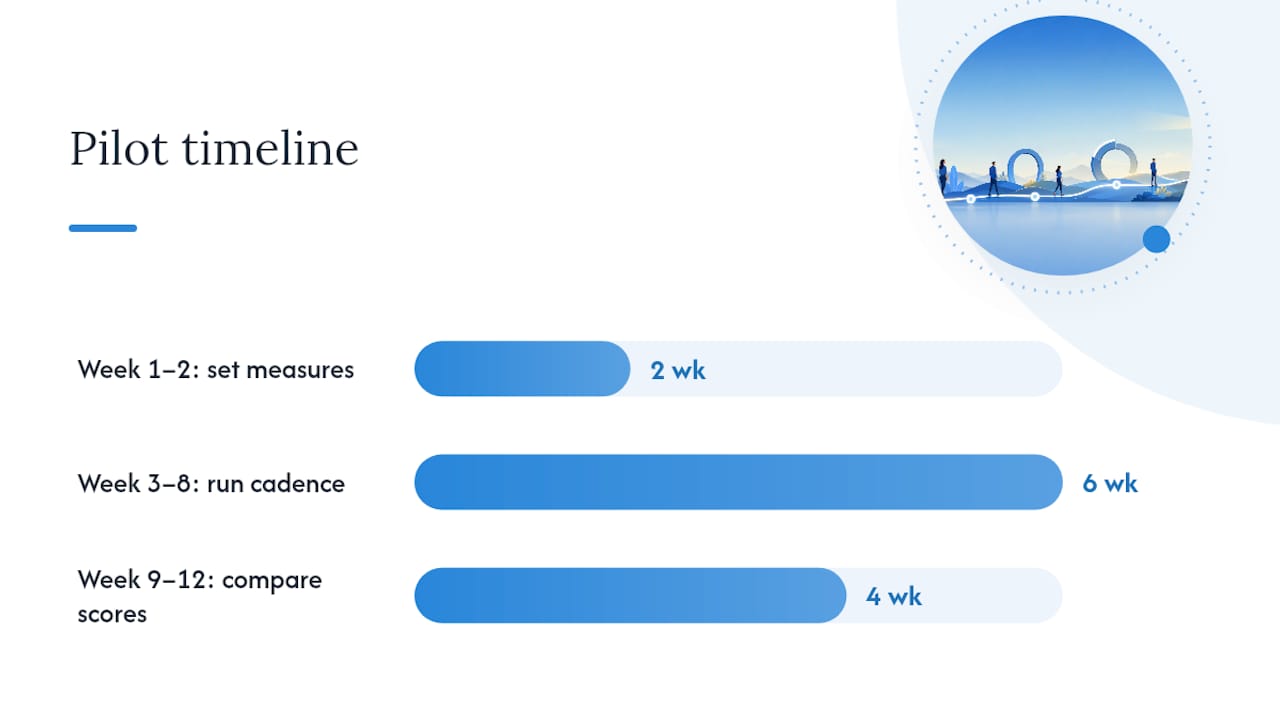
A 30-day playbook to pilot retention fixes
Run this on 5 to 10 at-risk accounts before rolling it out firm-wide.
- Week 1 to 2: Set three measures per account — response time, satisfaction pulse, and extra-billing incidents. Assign a second contact to each account.
- Week 3 to 8: Run the new communication cadence (weekly internal check, monthly client-facing update, one proactive call outside the normal reporting rhythm).
- Week 9 to 12: Compare churn propensity scores against a control group of accounts left untouched. Success looks like measurably faster response times and at least one saved account that showed early warning signs.
Get sign-off from a partner or practice lead before scaling, and build the surviving steps into your standard account handover template so they don’t quietly disappear when the pilot ends. HBR’s research on customer lifetime value backs the underlying economics: retaining the right accounts is disproportionately valuable compared with replacing them.
Pro Tip: Pick accounts for the pilot that are wobbling, not accounts already halfway out the door. You want to prove the fix works, not perform a rescue mission.
Role of firm culture and trust in client retention
Firm culture shows up in the client relationship whether you design it or not. A culture that rewards billable hours over client outcomes tends to produce account teams that under-communicate and over-promise, because internal incentives point away from the client’s actual interests. Clients notice this indirectly, through slow replies, defensive reporting, and a general sense that they’re being managed rather than served.
Trust operates on two levels: trust in the individual handling the account, and trust in the firm behind them. Practitioner commentary describes the failure mode well, calling it organisational drift, where clients don’t dramatically walk out but quietly disengage because the relationship depends entirely on one person rather than an institutionalised system. Firms with strong internal knowledge-sharing and consistent client-facing standards survive staff turnover far better than firms where each partner runs their own fiefdom.
Building that culture is a leadership decision, not a training exercise. It means measuring account health at partner level, not just billing targets, and making client retention part of how the firm defines a “good year,” not an afterthought behind new business figures.

How competitors and market alternatives influence client exits
Clients rarely leave for a competitor they’ve never spoken to. They leave because a gap opens up, and a competitor happens to be visible when it does. Direct competitors, in-house alternatives, and new tools that let clients do part of the work themselves all become attractive the moment your own delivery slips.
This is why treating “we lost them to a cheaper firm” as the whole story is usually wrong. The client went looking because something was already missing. Competitive pressure accelerates a decision that relationship or delivery problems already set in motion, in the same way price does. Firms that keep close tabs on their own service gaps worry less about competitor moves, because there’s less opening for a rival pitch to land.
The practical response isn’t to match every competitor claim. It’s to close the specific gap that made the client start listening in the first place, whether that’s slower turnaround, weaker reporting, or a junior team member who replaced a trusted senior contact.
Real-world patterns behind client churn
The patterns repeat across sectors more than most managers expect. A financial advisory client stops reviewing quarterly reports, engagement quietly drops, and six months later a resignation letter arrives citing “a change in direction,” a phrase that almost always means the client stopped feeling seen.
A marketing agency client raises an unplanned charge on an invoice with no warning attached. The amount itself is modest, but the surprise reads as carelessness, and the account starts asking for competitive quotes within the quarter. This matches the delivery-versus-billing pattern Swydo’s research surfaces: the stated reason (cost) rarely matches the real trigger (poor communication around cost).
A professional services client sees their trusted senior contact move to a new role internally, and the account gets reassigned without a proper handover. Within a year, the relationship has cooled to the point of non-renewal, echoing HBR’s finding that loyalty often sits with the individual rather than the firm. None of these scenarios involve a dramatic failure. They involve a slow erosion that nobody flagged early enough to fix.
Segmenting clients for a sharper retention approach
Not every account needs the same level of attention, and treating them identically wastes effort on low-risk clients while under-serving the ones actually at risk. A simple tiering model works better than a blanket policy.
- High-value, high-risk clients need named executive sponsorship, quarterly business reviews, and a second point of contact as standard, not as an exception.
- High-value, stable clients still need proactive check-ins, but the cadence can stretch, provided reporting stays consistent and visible.
- Lower-value clients benefit most from process and automation, standardised onboarding, templated reporting, and scheduled check-ins that don’t rely on manual effort from senior staff.
- New clients in their first 90 days deserve disproportionate attention regardless of value tier, given how often early departures trace back to onboarding gaps.
Segmentation also changes what “success” looks like. A satisfaction dip in a high-tier account should trigger an immediate call. The same dip in a lower-tier account might simply prompt an automated check-in email. Matching effort to risk keeps the retention programme sustainable rather than something that quietly collapses under its own workload.
Systems beat heroics in client retention
The uncomfortable truth is that most firms rely on a handful of strong personal relationships to hold their client base together, and call that a retention strategy. It isn’t one. It’s a succession risk waiting to surface the day that person takes annual leave, changes firm, or retires.
Building shared account ownership and documented client context isn’t glamorous work, but it’s what actually survives a partner’s departure. Prioritise the system over the star performer, because a firm that depends on individual heroics for client loyalty is one resignation away from a retention crisis.
How Cloud 9 helps you fix the retention gaps that matter
Everything covered here, faster response times, tighter onboarding, visible reporting, shared account coverage, depends on systems most firms don’t have time to build from scratch. Cloud 9 maps directly onto those fixes: CRM and marketing automation that flags a stalled account before it goes quiet, managed cloud services that keep the platforms your team relies on running without the outages that erode trust, and reporting workflows that turn scattered updates into the kind of outcome-linked reports clients actually forward to their own boards.

You don’t need to overhaul everything at once. A short diagnostic conversation with Cloud 9 can identify which one or two fixes, better onboarding automation, a shared client dashboard, tighter platform reliability, will move the needle fastest for your firm. Start with a website and systems review to see where the delivery gap is actually opening up, and build from there.
Sources
- An Interview Study to Understand the Reasons Clients Change Audit Firms and the Client’s Perceived Value of the Audit Service
- What advisors learn from clients who leave other firms
- Client retention strategies for agencies (2026 guide)
- Client retention strategies that actually work for marketing agencies in 2026 – Swydo
- Research: Are clients loyal to your firm, or the people in it?
FAQ
What should you say to a client who is leaving?
Ask directly for the real timing and driver behind the decision, then ask what would have changed their mind. This gives you an honest read on whether a win-back offer makes sense or a graceful exit serves both sides better.
Can you tell other clients that a client is leaving?
Generally, no, unless the departing client gives explicit permission or your contract requires disclosure. Treat the departure confidentially and focus on a clean handover rather than discussing it externally.
Why do clients leave their financial advisor?
Morningstar’s research on advisor departures found service quality accounted for around 32% of reasons given, compared with roughly 11% for investment returns, meaning communication and attention matter more than portfolio performance.
When should a firm consider ending a client relationship?
Consider it when a client relationship consistently costs more in time, billing friction, or team morale than it returns in value, particularly if repeated attempts to fix communication or expectations haven’t worked. A structured offboarding process, similar to the one used for client-initiated exits, protects the firm’s reputation either way.