Membership renewal automation: what to automate and what to keep human

Membership renewal automation works when one system of record drives the whole cycle: the reminder, the payment, the failed-payment follow-up and the record update. It fails when it is a scheduled email bolted onto a spreadsheet. This guide sets out what to automate, where AI genuinely helps, where a person should stay in control, and the UK rules that now shape the wording of renewal emails.
TL;DR
- Automate the predictable steps: renewal dates, reminders, payment collection, failed-payment retries and record updates. Keep people on exceptions, lapsed senior members and first-year onboarding.
- Automation is only as good as the data behind it. Joining your CRM, finance system and member portal comes before any AI.
- Use AI for drafting, segmentation, risk flagging and answering member questions from approved sources. Do not let it decide refunds, discounts or eligibility.
- Keep neutral renewal notices separate from promotional content. The ICO treats the two differently under PECR, and the new subscription rules are due in January 2027.
- Start with one membership category, measure the renewal rate and admin hours, then extend.
Table of Contents
- What membership renewal automation actually covers
- Start with the system of record, not the email tool
- A renewal workflow worth building
- Where AI helps, and where it should not
- The UK rules that shape renewal emails
- The first-year problem
- Renewal emails: what to include
- How to roll it out without a big-bang project
- Our perspective
- Where we can help
- FAQ
- Sources
What membership renewal automation actually covers
Most organisations picture a reminder email sent 30 days before expiry. That is the smallest part. A full renewal cycle has at least seven steps:
- Identify who is due, by category, date and payment method.
- Send an advance notice and a main reminder.
- Collect payment by card, Direct Debit or invoice.
- Chase failed or late payments.
- Update the membership record, portal access and benefits.
- Issue the receipt, certificate or confirmation.
- Flag members who are drifting away so someone can speak to them.
Each step touches a different system. Dates live in the membership database, payments in the finance package or payment provider, emails in a marketing tool, access in the website. When those systems do not talk to each other, a person fills the gaps with spreadsheets, and that is where renewals get missed or contradicted.
The structure of your cycle matters too. The Trade Association Forum’s 2025 benchmarking survey found that 57% of associations still run a fixed 12-month cycle where every member renews on the same date. That is simple to administer, but it creates a single peak of work each year. Automation is what makes rolling or anniversary renewals practical, because nobody has to diarise individual dates by hand.
Start with the system of record, not the email tool
The most common mistake is buying an email sequence tool and calling it automation. If the tool reads from a stale export, it will send the wrong reminder to the wrong person with confidence.
Before you automate, settle three questions:
- Which system is the source of truth for membership status and renewal date? One system, not three.
- How does payment status reach it? If finance records a Direct Debit failure in one place and the CRM never hears about it, a member who has paid still gets chased, and one who has not stays active.
- What triggers access changes? Portal access, directory listings and member-only content should follow the record automatically, with a grace period you have chosen deliberately.
This is integration work rather than AI work, and it is where most of the value sits. If your finance package is Xero, our Xero and CRM setup guide covers the failure points that break month-end reconciliation. For the wider picture, systems integration: a practical guide for business leaders explains how to join CRMs, databases and APIs without replacing everything.
A renewal workflow worth building
Here is a sequence that suits a typical UK trade association or professional body with annual membership. Adjust the timings to your own cycle.
| Timing | Action | Automated? | Person involved |
|---|---|---|---|
| 60 days before | Neutral advance notice with renewal date, price and how to change or end membership | Yes | None |
| 30 days before | Main reminder with payment link, or Direct Debit confirmation | Yes | None |
| 14 days before | Reminder to those who have not responded; usage check | Yes | Membership officer sees a list of high-value or at-risk members |
| Renewal date | Payment taken, record and portal updated, receipt sent | Yes | None |
| 7 days after | Failed or unpaid: friendly nudge with a simple way to pay | Yes | None |
| 21 days after | Still unpaid: task created for a named person | Partly | Yes, a phone call or personal email |
| Lapse | Access adjusted, win-back sequence queued | Yes | Review for senior or long-standing members |
Notice what is deliberately not automated: the call to a member of 15 years who has gone quiet, and any request to waive or reduce fees. Those are relationship decisions.
Where AI helps, and where it should not
Rule-based automation handles the table above. AI earns its place in the parts that rules handle badly. We would be sceptical of any pitch that puts it everywhere.
Good uses
- Flagging risk. A model can combine signals already in your CRM, such as event attendance, portal logins, email opens and support queries, to surface members who look likely to lapse. A person then decides what to do. Our guide to what churn rate means for a membership and how to cut it covers the measures that make this useful.
- Drafting and personalising. AI can draft renewal wording for each membership category, referencing what that member actually used. Staff approve templates once, rather than every send.
- Answering routine questions. “When does my membership renew?”, “Can I change to the corporate rate?” and “Where is my invoice?” make up a large share of renewal-season email. An AI chatbot or internal knowledge assistant that answers only from approved sources, such as your published fee schedule and the member’s own record, can take that load while handing anything unusual to staff.
- Triage for staff. An internal assistant can summarise a member’s history before a call, so the person phoning has the context in front of them. See governance-first internal AI assistants for how to set that up with sensible controls.
Keep people in control of
- Refunds, waivers and discounts. Money decisions need a named approver.
- Eligibility and category changes. A wrong call here affects voting rights, regulated titles or professional standing.
- Sensitive circumstances. Bereavement, ill health or a complaint should never receive an automated chaser. Build a suppression flag that staff can set.
- Disciplinary or conduct matters. Nothing should be sent to a member under investigation without human sign-off.
In every case, set clear data boundaries. The assistant should see only the fields it needs, work within your UK GDPR lawful basis and retention rules, and log what it says. If you cannot explain to a member what data was used to produce a message, do not automate it yet.
The UK rules that shape renewal emails
Three pieces of regulation affect how you word and time renewal communications. This is general information, not legal advice: check your own position with your solicitor.
Consumer subscription rules: DMCCA
The Digital Markets, Competition and Consumers Act 2024 introduces a new subscription contracts regime. Section 258 requires reminder notices to be sent to consumers in specified circumstances. The government’s response to the consultation describes new rights to clear information before sign-up and regular reminders, particularly before free trials end or 12-month or longer contracts renew.
Timing has moved. TLT reports that the go-live date was brought forward to January 2027, with no change to the requirements themselves. Check the latest position before you finalise your build.
Two practical points for membership bodies:
- The regime concerns contracts with consumers. A body whose members are individuals paying their own fees is likely to be in scope. One that only has corporate members may not be. Many have both, so confirm which categories are affected.
- Where it applies, your automation needs to produce the right notice at the right time, record that it was sent, and make ending the membership as easy as joining. Build the audit trail into the workflow rather than reconstructing it later.
PECR: service messages versus marketing
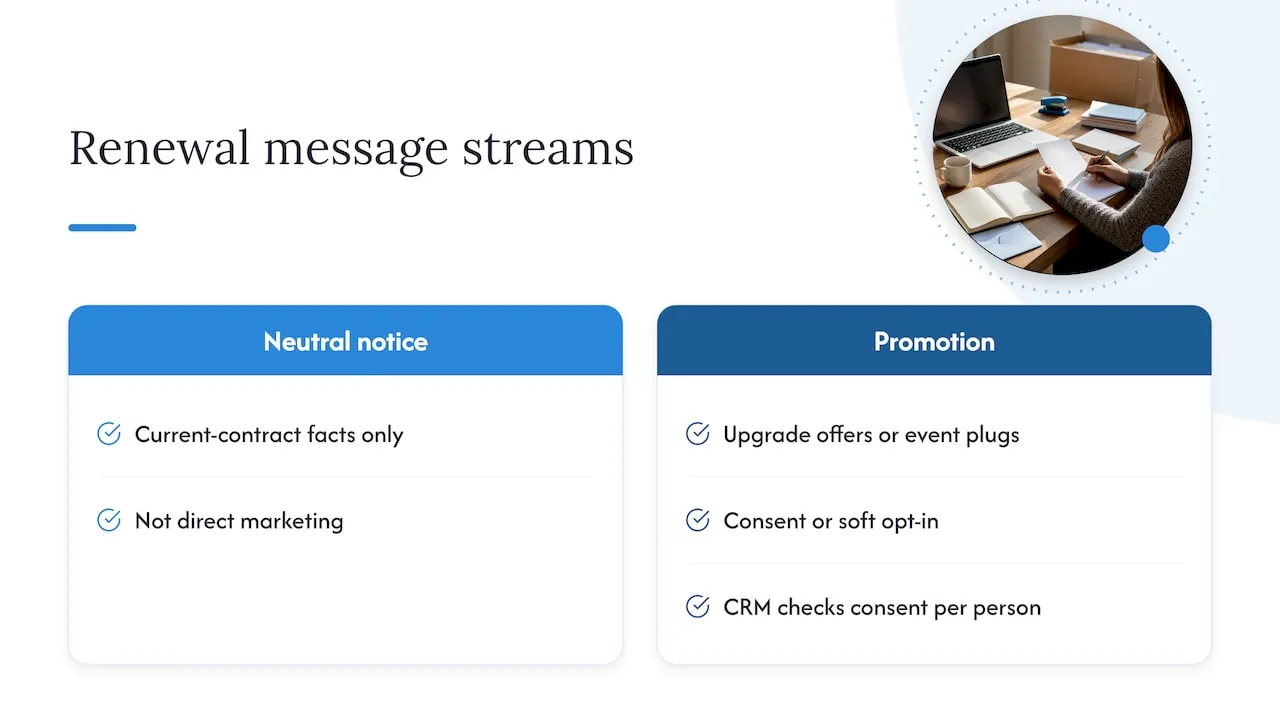
The ICO’s PECR guidance says routine customer service messages, meaning information someone needs about a current contract, do not count as direct marketing. A neutral renewal notice fits that description.
The trap is mixing the two. Add an upgrade offer, a discount for early payment framed as a promotion, or a plug for next month’s conference, and the message starts to look like marketing, with consent or soft opt-in considerations that follow. The simplest design is two separate streams: a plain notice that carries only the facts, and a separate, consented communication for anything promotional. Your CRM must hold the consent status per person so that the automation can respect it.
UK GDPR
Any AI that reads member records is processing personal data. Document the purpose, limit the fields, keep a human review step for decisions that significantly affect individuals, and be able to explain the logic. This is an area to involve your data protection lead early.
The first-year problem
Aggregate renewal figures can hide weak spots. Newer members often renew at a lower rate than established ones, and the first months are when habits form. Automation can make this worse if it replaces a welcome with a billing notice.
So build the cycle around the whole year, not the invoice:
- A welcome sequence in the first weeks that points to the benefits the member joined for.
- A check-in at around 90 days, prompted by usage data: have they logged in, booked an event, downloaded anything?
- A short human touch for members who have done nothing by then. A brief personal email from a named person often does more than a fourth automated message.
Measure first-year renewal separately from the overall rate. If you only watch the blended number, you will not see the problem until it is expensive.
Renewal emails: what to include
For the reminder itself, keep it plain. A good notice states:
- The membership name and category.
- The renewal date and the amount, in pounds, including any change from last year.
- How the payment will be taken, or how to pay.
- How to change, pause or end the membership.
- A named contact and a reply address that a person reads.
Resist clever subject lines. “Your membership renews on 14 January” will be opened by the people who need it. Test wording on a small group first, and have a human read every template when your fees, rules or branding change.
How to roll it out without a big-bang project
- Map the current process. Follow one renewal from start to finish, including every spreadsheet and inbox it passes through. Note the hours spent and where errors happen.
- Pick one category. A single membership type with a clean data set is enough for a first run.
- Fix the data and connections. Join the CRM, finance and portal so status and payment flow one way, automatically.
- Build the rule-based cycle first. Reminders, payments, retries and record updates.
- Add AI where it is clearly useful. Risk flags, question answering, summaries. Keep approval and review points.
- Measure for a full cycle. Renewal rate, first-year rate, failed payments recovered, staff hours, member complaints.
- Extend to other categories once the numbers justify it.
For a wider view of sequencing, see CRM AI automation: what to deploy first and why.
Our perspective
We see the same pattern in membership bodies, charities and professional services firms. The renewal process is rarely broken because of a lack of emails. It is broken because the membership database, the finance system and the website each hold a slightly different version of the truth, and staff spend renewal season reconciling them.
So we start with how the work actually happens, then connect the systems, and only then add AI where it has a clear business case. Over twenty years of joining websites, databases, CRMs, APIs and membership systems has taught us that an assistant is only as trustworthy as the data it reads. We would rather build a modest workflow that staff trust than an ambitious one they route around.
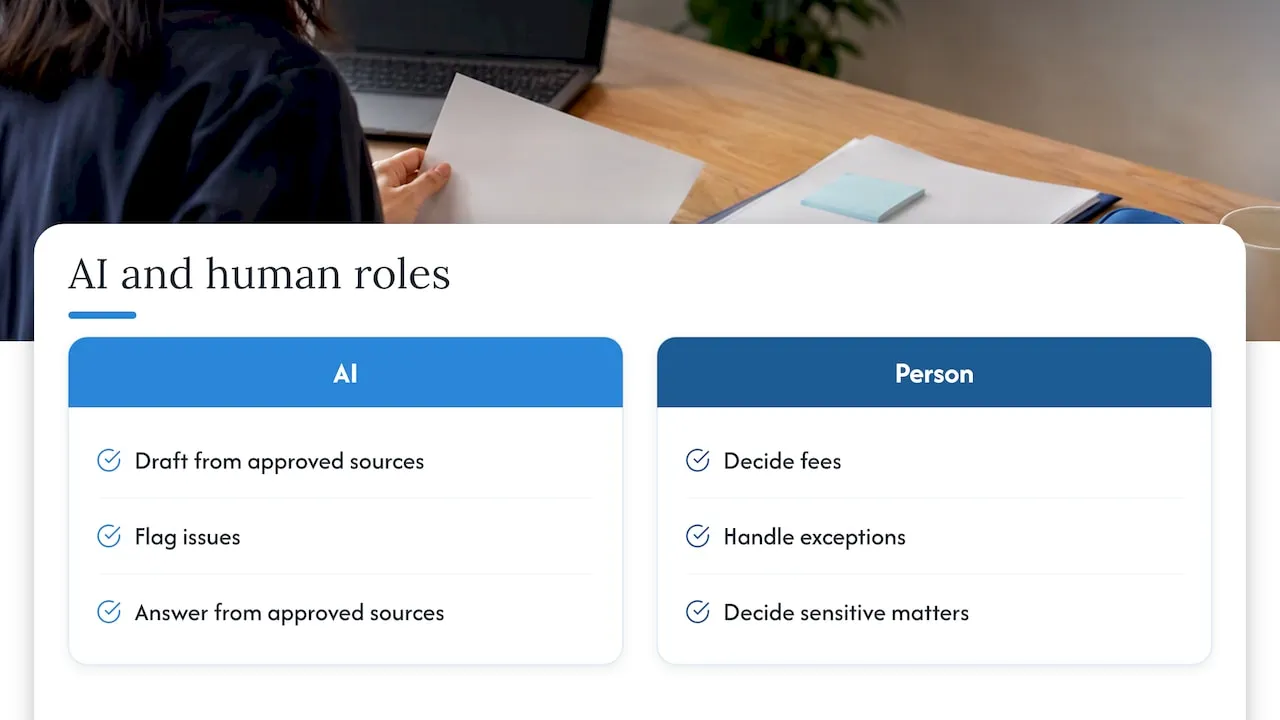
We are also firm about limits. AI should draft, flag and answer from approved sources. A person should decide on fees, exceptions and anything sensitive. If a use of AI cannot be explained to a member in a sentence, it is not ready.
— Rob
Where we can help
We design and build CRM and marketing automation for established UK organisations, and connect it to the systems you already run through AI and systems integration. If you want to see what the full range looks like for a membership body, our AI services overview is the place to start, and we can talk through your renewal cycle and where automation would pay back first.
FAQ
What is automatic renewal of a subscription or membership?
It means the membership continues into the next period without the member taking action, usually by taking payment through a saved card or Direct Debit. Where the consumer subscription rules apply, the member must be given clear information and reminders beforehand, and a straightforward way to cancel.
Do renewal reminders need an unsubscribe link?
A neutral notice about a current contract is treated by the ICO as a service message rather than direct marketing. Once you add promotional content such as upgrade offers, marketing rules apply, including consent or soft opt-in. Keep the two separate and check your own position with your data protection lead.
How far ahead should I send renewal emails?
A common pattern is an advance notice around 60 days out, a main reminder at 30 days, and a follow-up at 14 days. Members paying by Direct Debit need less chasing but still need to know the amount and date. Test the timing against your own cycle, and check the statutory reminder timing if the DMCCA regime covers your members.
Can AI write our renewal emails?
Yes, for drafting and personalising from approved templates and facts held in your CRM. A person should approve the templates, and AI should not decide discounts, refunds or eligibility. Keep sensitive cases out of automated sequences entirely.
What should we automate first?
Start with the reliable steps: identifying due members, sending reminders, collecting payment and updating records. These save the most staff time with the least risk. Add AI-based risk flagging and question answering once the data connections are working.
Sources
- Digital Markets, Competition and Consumers Act 2024, section 258 (reminder notices)
- GOV.UK: government response on the new subscription contracts regime
- TLT: DMCC Act subscription contracts regime brought forward
- ICO: electronic and telephone marketing (PECR guidance)
- Trade Association Forum: Annual Benchmarking Survey 2025